Early Days in Docs
Chris trained in the Structural Film movement and Experimentalism under SUNY University at Buffalo's Tony Conrad. He studied under Princeton University's Keith Sanborn in filmmaking, cinema theory, and expanding structuralist filmmaking to include an interrogation of culture. He studied cinema, digital media, film and music impressionism under Alexander Kort. He then added a dual-major in video documentary production under Brian Henderson, Ph.D. and Sarah Elder.
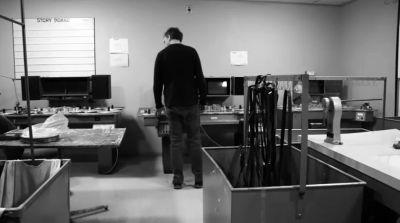
"Each professor broke boundaries. Each invigorated the soul... but it was Professor Sarah Elder's films that were lightning in a bottle for me."
Sarah Elder's deep studies in indigenous topics, specifically films like Drums of Winter, were a strong influence.

"In my early days at university, I was unseasoned and callow. I was floating in the murky clouds of avant-garde cinema, overthinking everything to the point of paralysis, and her work gave me the sharp focus I needed. Tangible film practices that were simple and direct. Juxtaposition more cleanly than anything I had seen to date. All made possible through the film's editing. Simply tell a story nobody has seen or heard yet, and then get it out there, in front of people. I've spent an entire career trying to pay forward that lesson."
The lesson contained more than filmmaking pursuits. Telling stories about Native peoples became a priority. His work would include:
America's Stairway (2025, APT)
New York Suffrage Stories (2022, BTPM)
Discovering Your Warrior Spirit (2021, BTPM)
The Warrior Tradition (2019, PBS)
Lake of Betrayal (2018, Vision Maker Media)
1812 on the Niagara Frontier (2012, BTPM)
Glorious Battle (2011, Niagara Parks/BTPM)
The War of 1812 (2011, PBS)
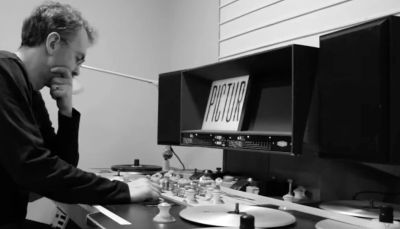
After university, he moved to East Hampton, New York, to work for the documentary producer, Courtney Sale Ross.
"I unflinchingly believe that her documentary, Listen Up! The Lives of Quincy Jones contains the best editing in any documentary, ever. It's invigoratingly musical, and a primary influence. It had five editors, Milton Moses Ginsberg, Pierre Kahn, Andrew Morreale, Laure Sullivan, and Paul Zehrer, and their collaboration with Mrs. Ross broke all molds. It is a documentary masterpiece."
At that time, East Hampton was a beehive of activity.
"I did some work at the Ross School. I did some work for Steven Spielberg and his staff. It was fast-paced and reliant on my proximity in the area, so I got my hands into all of it. Not a bad gig, right out of college."

While there, Chris also volunteered for the Hamptons International Film Festival.
"Picnic style, we were all on blankets outside watching a film. I was seated next to Roy Scheider, which was fantastic for many reasons, not the least of which was my perspective glancing over to him was the exact framing of his beach shot in JAWS."
After The Hamptons, Chris moved to Manhattan, where he found his first Avid editing system at The New York Film Academy.


Avid Media Composer
"To get into their Avid room, you needed to walk past a long row of 16mm film editing machines. That act alone held meaning. The first time I did so, a brilliant filmmaker named Elizabeth Schub (Cuba 15) was working on the system. She showed me how quickly cuts could be made in an Avid. Working with 16mm and 35mm film at the time, an editor would average 3-5 cuts per minute. In Avid, it was more like dozens.
Once I was able to get into that room on my own, I never left. I'm still there, in a way."
Access to an Avid was limited in those days. So, when he learned that his hometown's PBS station had bought an Avid, he packed his bags.
His first foot-in-the-door job for PBS was as a secretary. He took it because it also gave him unlimited access to the Avid room. He spent 18 hours per day, learning everything he could. He apprenticed under Christopher Thomas, one of the most experienced television editors in the area.
Once he proved himself to management, they moved him into editing, full-time. "I'm glad they did... You couldn't find a more terrible secretary."
All documentary, all the time
PBS is the primary public broadcaster in the United States, and one of the most respected presenters of documentary works.
Most of Chris's editorial work for PBS focused on historical, environmental, and social subjects, as well as documentaries bringing Indigenous topics into the national spotlight. He also worked on various projects for Reading Rainbow and the Mark Russell Comedy Specials.
He trained under expert programmer and producer, John Grant, for whom he edited many television programs. Grant's wisdom in operations and in efficient storytelling taught him how to run productions like a well-oiled machine. (Examples)
His longest-running collaboration has been with documentary filmmaker Paul Lamont, focusing on the high-art of documentary cinema and pursuit of the human condition.
Chris has also edited content for American Public Television, Vision Maker Media, and the Center for Independent Documentary.

Due to budget constraints, there was little money for writers, associate producers, assistant editors, or VFX editors.
"I kept consuming more responsibilities because projects could rarely afford any of that. I needed to deliver projects that felt like they had all of those people working on it. By standing up and taking ownership of the content, you truly do elevate a production to new heights."
Chris edited a number of independent short fiction films, including collaborations with filmmaker-turned-author, Soman Chainani.
"My gosh, Soman was such a fun filmmaker to work with. His attention to detail and extracting every drop of storytelling possible was a thrill. He's a craftsman. I'm so thrilled for the successes he's found today, certainly well-earned."

At the time, there was a growing demand for industry learning, and a yearning for collaboration. He and a fellow editor created the largest Avid User Group in the area, bringing in members from three upstate New York cities plus Toronto. They created curriculum, coordinated sessions with Avid engineering staff, and presented on Avid's workflows, features and updates.
"Not everyone was editing on Avid, but the workflows we taught were universal. Interestingly, no one from the other stations knew each other because of the competitiveness of their corporate leaders. The editors at the NBC station wouldn't be allowed into the CBS station, and so on. But, since we were at PBS, we were neutral territory. At PBS everyone was welcome. So, everyone came. It was a fantastic way to tear-down the unnecessary walls between people in the same industry."
Chris frequented the Avid Communities under the username "Pixel Monkey". Avid's own staff began reaching out to Chris to learn his workflows. He became an advisor for various members of the Media Composer design and engineering teams.
He became an Avid ACA Leader and a Master Class Instructor, representing Avid Media Composer and its workflows at various venues.
Career Pivot: The Move to Avid
In the editorial community, Chris Bové is also a customer advocate and support expert. He has spent many years supporting some of the top editors in the world on Oscar and Emmy winning films and TV shows.
Avid has recognized him for this by appointing him to several positions in customer advocacy, including Voice of the Customer and Avid Customer Association leadership roles.

Chris Bové first met Avid's President & CEO, Jeff Rosica, in 2014 at the Avid Connect event in Las Vegas at NABShow. Over the next few years, they often discussed Media Composer's future and the long-term needs of independent creatives.

Jeff invited Chris to multiple Avid events, including "Avid Connect", "Avid Vision & Strategy", and several "Voice of the Customer" sessions. He co-presented a Masterclass on documentary editorial workflows with longtime friend, Steve Audette ACE, Senior Documentary Editor for PBS Frontline in Las Vegas.
A staunch customer advocate, Chris was soon headhunted by Marianna Montague to work at Avid, replacing her as the head of the Community Team. His responsibilities quickly grew, as he ran a series of Customer Success teams, their online Communities, Digital Customer Success Managers which assisted Avid customers directly.
Jeff eventually retired, and the new CEO was soon meeting with Chris regularly. This lead to a unique new opportunity, working with the CEO to strategize, at a VP-level, new ideas with him.
Chris built new teams and workflows in customer adoption, a new user enablement hub for product education, a CSM enablement strategy, a new online Community platform, consolidation of decades of Knowledge Base materials into a new Chatbot, using RAG (Retrieval-Augmented Generation) to allow LLMs to access decades of Knowledge Base materials and Community and Social posts, and a simple mobile app for users to access all product education, track their learning progress, and get access to Support and Services.
After a wonderfully rich time of learning and building at Avid, Chris is running a consultancy that advises companies how to establish and leverage online Communities, Customer Success teams, and LAER workflows.
He is still editing documentaries, freelancing for public media organizations, creating Avid educational curriculum for universities, and teaching the next generation of editors.